Everything you need to know about the charcoal toothpaste fad

A confident smile starts with a healthy mouth. That's why we're excited to share this series of real talk and straightforward solutions on how to improve oral health. This is the first post of the series.
Charcoal toothpaste is everywhere from Instagram ads to the oral care aisle. Dozens of new brands have launched charcoal toothpaste, and it's getting so much traction that even the big established players like Colgate launched their own charcoal toothpaste.
But popularity doesn't mean that it works. The best hygienists around the country cringe at the charcoal toothpaste fad. Here's everything you need to know about charcoal toothpaste.
First, what is the "activated charcoal" in toothpaste?
The activated charcoal in your toothpaste is the same kind of charcoal in a water filter. It's "activated" by being processed at very high temperatures. The temperature is so high it alters the structure of the charcoal and increases its surface area. Sort of like popping a kernel of corn.
The larger surface area has lots of contours that trap and absorb other particles. Then when the charcoal is washed away, those other particles wash away with the charcoal. Charcoal is great in water filters because it traps all kinds of particles floating in your water, resulting in a clean and crisp tasting water.
Activated charcoal works wonders for your drinking water. So how about your teeth?
Charcoal toothpaste says it whitens your teeth but…
You've seen the ads. Just brush your teeth with charcoal toothpaste and out comes a brilliant smile. It seems too good to be true! Well, that's because it is.
There simply isn't any evidence that charcoal is effective at whitening teeth. Several studies have shown that activated charcoal toothpastes that claimed to be "naturally whitening" were ineffective at changing the color of the teeth.
It not only doesn't work, it can harm your enamel and turn your teeth yellow!
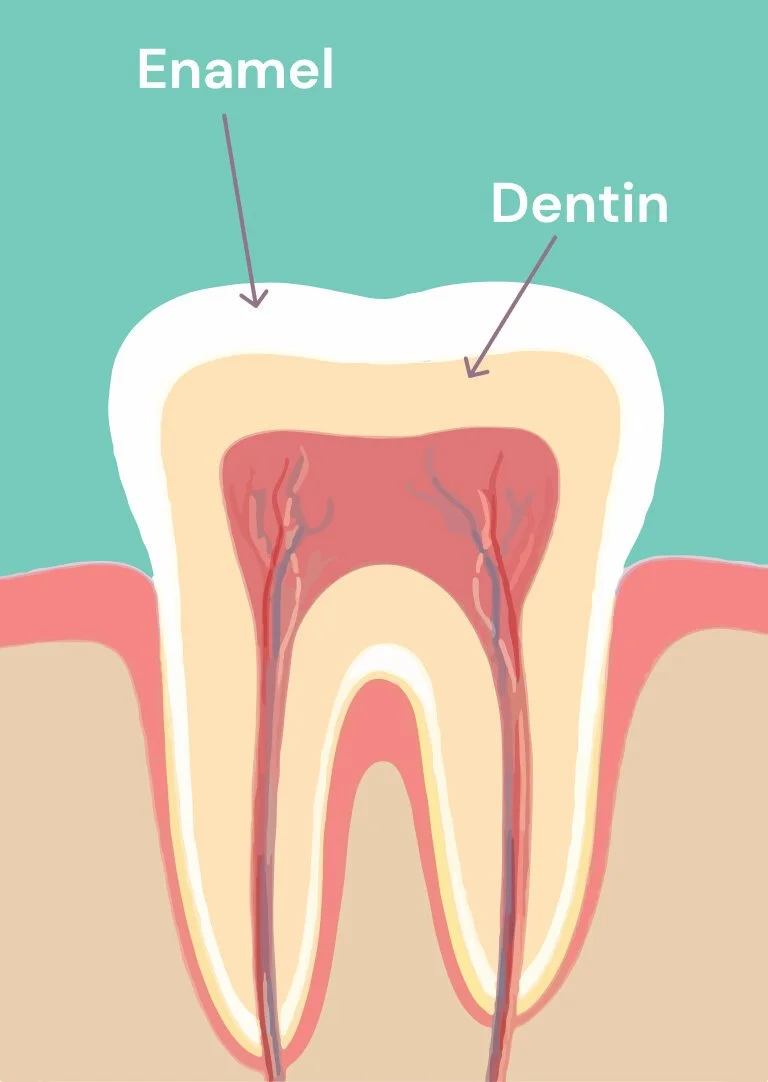
Charcoal-based products claim to whiten teeth because they remove surface stains. How? The charcoal is extremely abrasive and acts like a steel wool brush scrubbing the surface of your teeth. While that might sound pretty good, the bad news is it's also scraping away the surface of your enamel.
That means it's not changing the color of your enamel (like a professional whitening) but instead scraping away the surface of your teeth. That leads to microscopic grooves in the enamel where bacteria gets trapped and increases your chances of cavities and gum irritation.
Keep using abrasive charcoal toothpaste, and over time your teeth could turn yellow! Scraping away the tooth leads to thin enamel, which then allows the inside, yellow layer of your tooth (the dentin) to show through.
By now it should go without saying: don't just throw out the charcoal toothpaste, throw out any charcoal powders for your teeth. Those tiny powder particles have a tendency to get stuck under the gums and lead to gum irritation and inflammation.
"I've been using charcoal toothpaste! Did I cause permanent damage to my teeth?"
After about one month of consistently using charcoal toothpaste, your tooth surfaces can become significantly rougher. That rough texture signals damaged enamel which leads to discoloration, as well as increasing your risk for tooth sensitivity and decay.
The best thing to do is stop using the charcoal toothpaste immediately, and get to work rebuilding a strong foundation for your teeth. The best approach is to purchase a toothpaste that has a remineralization agent (more in our next post) and that is NOT marketed as a whitening toothpaste. All toothpastes that claim to "whiten" teeth are abrasive, so the best thing to restore your enamel is focus on toothpastes that restore enamel.
After a few weeks of giving your enamel some TLC, your teeth will start to regain their healthy foundation. That's a great time to connect with your dentist to discuss whitening options that will be safe, and effective, so you can have a confident and healthy smile.
Be a smart mouth with Wally. Custom oral care designed for your mouth and your life.